What is intestinal and colon ultrasound?
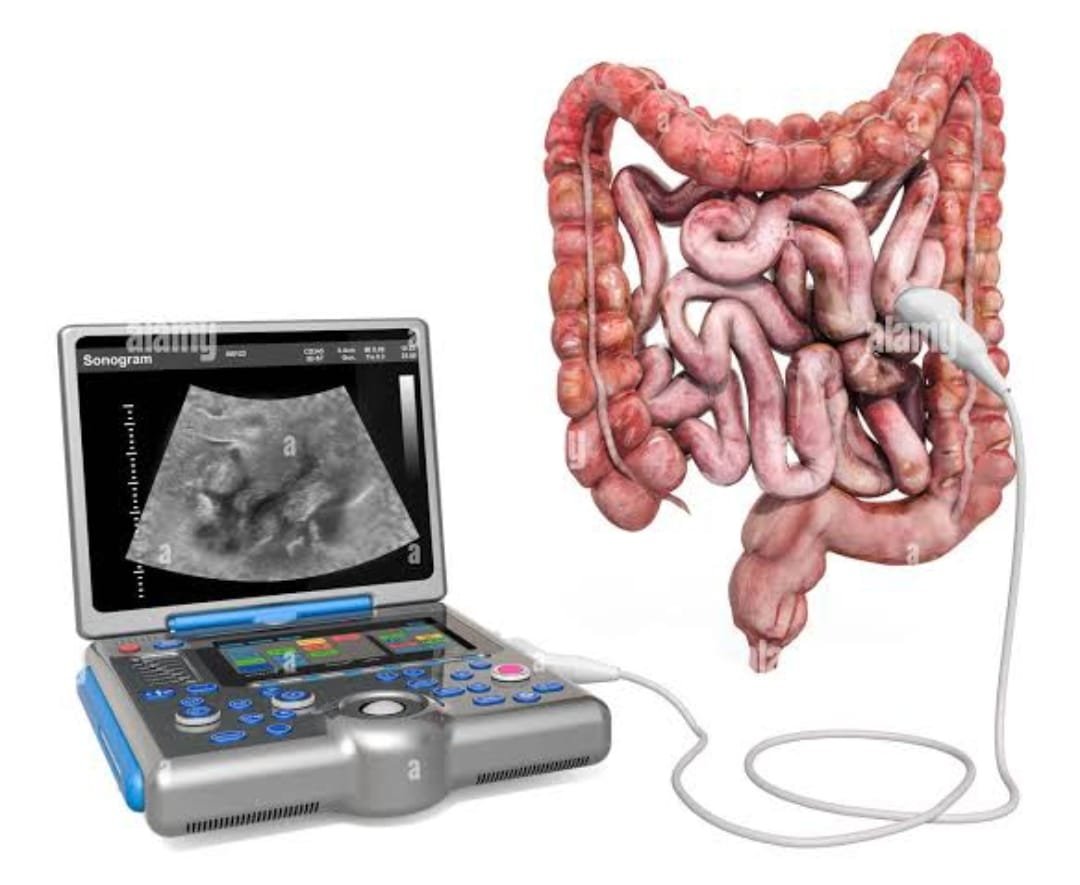
Intestinal and colon ultrasound is a modern technique that uses ultrasound waves to display detailed images of the gastrointestinal tract wall, from the stomach to the colon, passing through the small intestine.
The principle behind intestinal and colon ultrasound is measuring the thickness of the stomach wall, small intestine, and colon. It also evaluates normal bowel movement and detects any inflammation if present.
How is intestinal and colon ultrasound performed?
- This is done using an ultrasound machine with a specialized advanced probe designed to visualize the intestines and colon.
- Fasting for 4 hours before the examination is required.
- It is also recommended to drink plenty of water about 30 minutes before the scan.
- The doctor applies a medical gel to the abdomen to help transmit the ultrasound waves داخل البطن (into the abdomen).
Advantages of intestinal and colon ultrasound:
Intestinal ultrasound represents a breakthrough in the diagnosis of gastrointestinal diseases. It has brought a significant advancement in this field thanks to several advantages that make it an ideal option for both doctors and patients in many cases. أبرز هذه المميزات تشمل:
- Non-invasive examination:
It does not require any surgical intervention or exposure to radiation, unlike CT scans or X-rays, making it suitable for patients of all age groups without concern. - An alternative to colonoscopy in some cases:
If the ultrasound shows that the intestines and colon are normal with no concerning findings, it may eliminate the need for a colonoscopy, sparing the patient a more complex procedure. - Simple and quick procedure:
It takes no more than 10 minutes and can be easily performed during a medical check-up without the need for additional preparation or waiting. - Ideal for children and infants:
Due to the sensitivity of this age group, this examination is one of the most accurate currently available methods for diagnosing gastrointestinal issues in children without exposing them to any risks. - Cost-effective compared to other methods:
Compared to other investigations such as CT scans or MRI, intestinal ultrasound is a very economical option without compromising its effectiveness. - Provides accurate diagnostic information:
It offers clear images of the condition of the intestines and colon and helps detect many diseases that may be difficult to identify using other methods—all without the need for endoscopy or surgical intervention.
Uses of intestinal and colon ultrasound:
Intestinal ultrasound represents a major advancement in diagnosing gastrointestinal diseases, thanks to its high accuracy in evaluating complex and unclear cases without the need for traditional invasive procedures. It enables precise diagnosis of many conditions, including:
- Accurate differentiation between irritable bowel syndrome (IBS) and inflammatory bowel disease (IBD).
- Early and accurate diagnosis of ulcerative colitis and Crohn’s disease.
- Clear distinction between ulcerative colitis and Crohn’s disease.
- Early detection of complications related to Crohn’s disease and ulcerative colitis.
- Monitoring ulcerative colitis and Crohn’s disease after treatment without repeated colonoscopies.
- Avoiding unnecessary colonoscopy if the intestines and colon appear normal.
- Precisely identifying the location of inflammation and guiding targeted biopsies (improves endoscopy accuracy).
- Diagnosis of eosinophilic enteritis.
- Early detection of gastrointestinal tumors.
- Diagnosis of gastrointestinal lymphoma.
- Diagnosis of rare and difficult-to-detect abdominal wall and peritoneal tumors.
- Diagnosis of complete and partial intestinal obstruction.
- Diagnosis of chronic small bowel paralysis.
- Assisting in diagnosing celiac disease (gluten sensitivity).
- Diagnosis of colonic diverticula and their complications.
- Early and accurate diagnosis of acute and chronic appendicitis.
- Diagnosis of mesenteric inflammatory conditions.
- Evaluation of cases with fever of unknown origin.
- Diagnosis of unexplained weight loss.
- Diagnosis of unexplained ascites.
- Diagnosis of unexplained anemia.
- Diagnosis of intestinal tuberculosis.
- Diagnosis of chronic unexplained diarrhea.
- Evaluation of chronic, unexplained abdominal and pelvic pain.
- Ability to guide biopsies from the peritoneum and mesentery.
Conclusion:
Intestinal ultrasound is an effective tool for reaching accurate diagnoses in complex cases that are often difficult to detect (with conventional methods). It has also proven highly valuable in identifying rare diseases that are hard to diagnose otherwise.